
Zoning Changes planned in Low to Medium Density Residential Areas
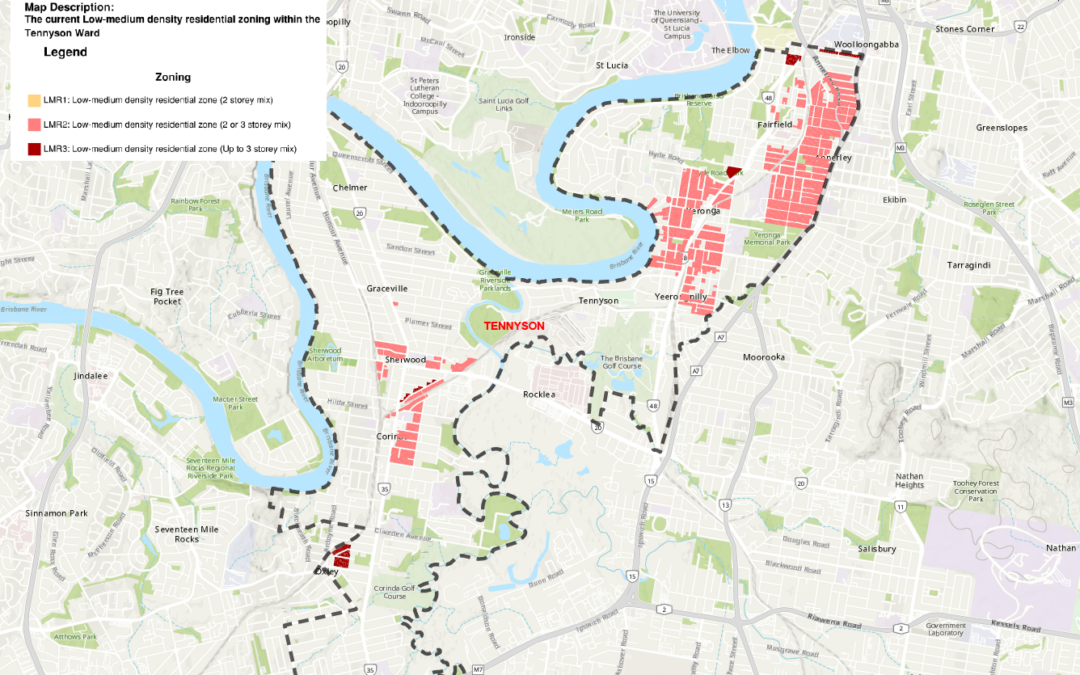
The Lord Mayor has announced proposed changes to the Low to Medium Density Residential Zone that will impact design, heights and carparking arrangements for numerous suburbs around Brisbane. About 14% of the City is zoned LMR (previously known as Res B). In Tennyson Ward this includes parts of Annerley, Yeronga, Fairfield, Yeerongpilly, Sherwood, Corinda and Oxley. All of these areas are “key locations” due to their proximity to rail stations, bus stops and shops.
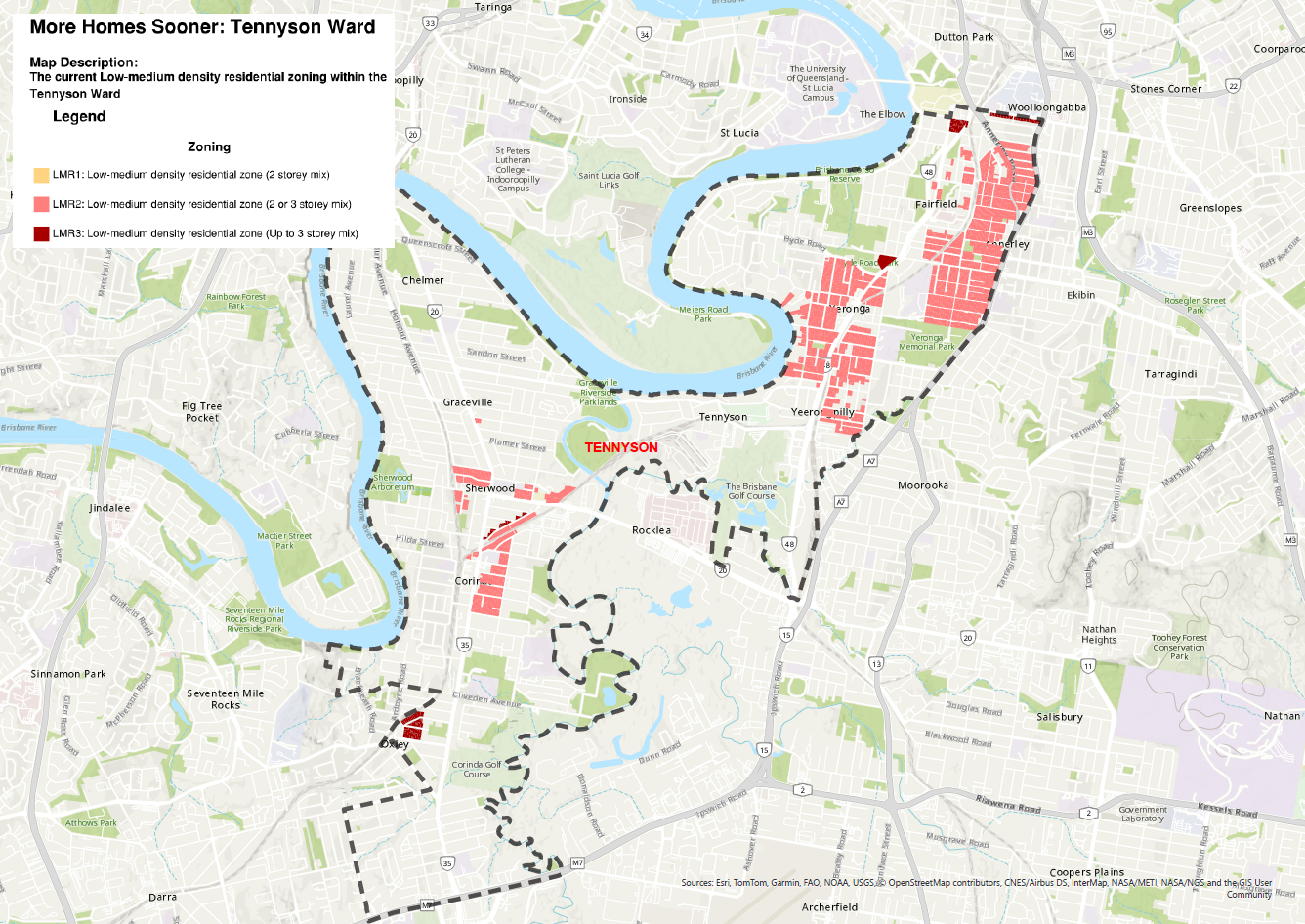
See the map below with affected areas marked in pink and red.
Without question we need more housing in well located areas, but not at the expense of safety, access and amenity, especially in older suburbs with very narrow streets or close to already parked out streets near rail stations and shopping centres. The key changes are:
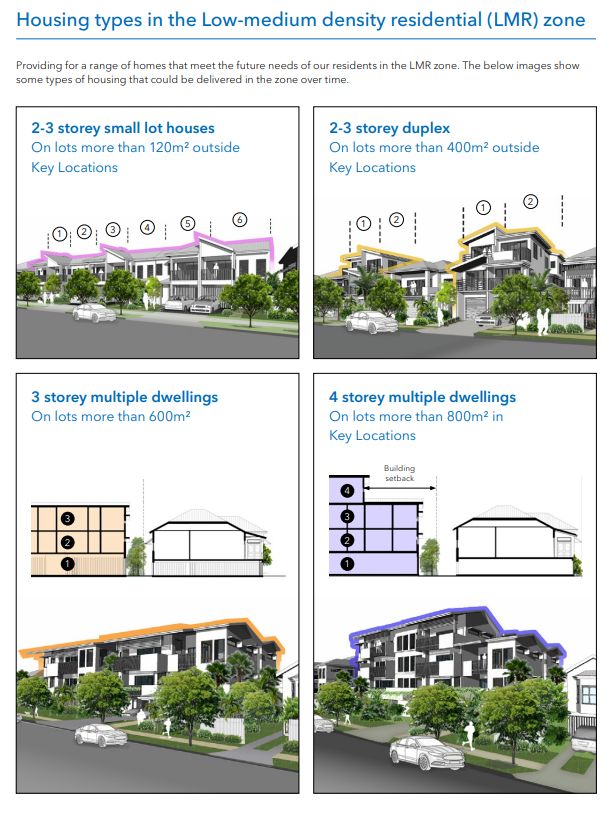
- increased heights up to four storeys and 14m;
- smaller block sizes down to 120 sqm (less than the size of a tennis court);
- larger development footprints up to 55%;
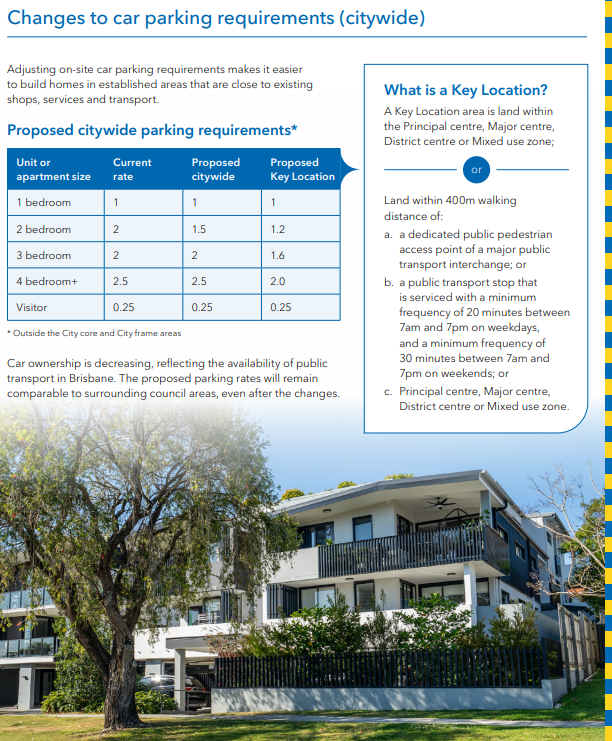
- reduced on-site car parking requirements;
- retirement or care facilities allowed in residential areas;
- reduced set-backs (front, side and rear); and
- more as of right development not requiring Council approval or public notification.
Things to be aware of…
Even if these zoning and planning changes are allowed, Brisbane City Council allows developers to exceed heights, development footprints, open space and parking requirements all the time. For example:
- in Yeronga, despite a height limit of four storeys, huge five storey developments have been allowed;
- in Annerley there are blocks as small as 109sqm;
- building setbacks (the distance between properties and the street) are reduced all the time; and
- building footprints exceeding 50% everywhere.
In essence, developers treat these rules as a minimum rather than a maximum and push Council for increases all the time.
What Council mischievously claims is that these planning changes will facilitate the “construction of more homes,” but this fails to recognise that Council is continuously approving developments that are land banked by developers waiting for a bigger pay day or not built at all. Nor does it mean that housing will be more affordable for young people and first home buyers. And forget about better infrastructure to accommodate more houses and people. Existing roads, footpaths, stormwater drains, parks, schools and services simply have to absorb even more. Simply upzoning areas of the City already under pressure is not the solution.
Find Out More
You can review all the materials online on Brisbane City Council’s website here.
Beyond Council’s summaries and marketing materials, the key documents are called the:
- “More Homes Sooner – Low medium density residential design – schedule of amendments.” This document shows the actual changes proposed to City Plan; and
- “More Homes Sooner – Car parking for multiple dwellings schedule of amendments.” This documents the reduction to carparking allocations that are proposed.
 Have Your Say
Public consultation is open until Friday 20 March 2026 and I encourage residents to have their say.
📧 Email: Strategicplanninghousing@brisbane.qld.gov.au ( make sure you include your name and address)
📱 Call: 07 3403 8888
✍️ Write:
Strategic Planning
Brisbane City Council
GPO Box 1434
BRISBANE QLD 4001
If you live in one of the affected areas outlined on the map above, it is critical that you make a submission to Council now.
The following are key issues of concern you might like to consider in your submission. I welcome your ideas, so please send me your submission and we will submit it for you.
- The current proposal is a “one-size-fits-all” proposal that does not recognise the capacity constraints of existing neighbourhoods within the LMR zone—a finer grained approach that recognises the challenges of character areas, narrow and steep streets and existing parking challenges should be considered.
- No change to building heights, density and carparking should be permitted in narrow, steep or character streets.
- Making non-compliance with the maximum height limit and development footprint impact assessable so public notification via a black and white notice sign is required.
- Retention of existing car parking requirements in streets around rail stations.
- Requirements for infrastructure charges levied on developments to be reinvested in the same suburb to improve local roads, footpaths, parks, stormwater networks and parks.
- Consideration of affordable housing criteria (a statutory discount of the market price) for a percentage of new properties to make housing more affordable for young people and first home buyers, e.g. one unit in blocks of six or more.